There are kitchens that function well.
There are kitchens that photograph beautifully.
And then, there are kitchens that feel like they belong to the rhythm of a home — quietly shaping mornings, conversations, light, and life itself.
There are kitchens that photograph beautifully.
And then, there are kitchens that feel like they belong to the rhythm of a home — quietly shaping mornings, conversations, light, and life itself.
This Los Angeles kitchen remodel was always meant to be the latter.
The Beginning: A Home Waiting to Breathe
Like many homes across Los Angeles, this residence carried layers of history. Not the grand, architectural kind, but the familiar, lived-in kind — where finishes outlast trends and layouts slowly lose their relevance to modern living.
The original kitchen was not dysfunctional, but it felt disconnected. The cabinetry was heavy. The materials were dated. Light entered the room, yet somehow never fully settled within it. The space worked, technically speaking, but emotionally it felt closed, visually fragmented, and stylistically uncertain.
The homeowners sensed this long before they could articulate it.
They didn’t arrive with a strict design brief or a folder of reference images. Instead, they spoke in feelings:
“We want it brighter.”
“We want it calmer.”
“We want it to feel clean but not cold.”
“We love modern kitchens, but we still want warmth.”
They didn’t arrive with a strict design brief or a folder of reference images. Instead, they spoke in feelings:
“We want it brighter.”
“We want it calmer.”
“We want it to feel clean but not cold.”
“We love modern kitchens, but we still want warmth.”
Hidden within those words was a deeper desire — a kitchen that didn’t just look new, but felt like a reset.
A space that could breathe.
A space that could breathe.
Finding the Direction: Scandinavian Principles in a California Context
Los Angeles has a unique design identity. It borrows freely — from Mediterranean villas, mid-century modern icons, contemporary minimalism, coastal softness, and global influences that reflect the city’s diversity.
Yet within this abundance of styles, Scandinavian design continues to resonate for one simple reason:
It understands restraint.
Scandinavian interiors do not overwhelm. They do not chase ornamentation or excess. Instead, they focus on balance, light, natural materials, and the subtle emotional impact of simplicity done well.
For this remodel, Scandinavian design became less of a theme and more of a guiding philosophy.
Not stark minimalism.
Not rustic farmhouse.
Not high-gloss contemporary.
It understands restraint.
Scandinavian interiors do not overwhelm. They do not chase ornamentation or excess. Instead, they focus on balance, light, natural materials, and the subtle emotional impact of simplicity done well.
For this remodel, Scandinavian design became less of a theme and more of a guiding philosophy.
Not stark minimalism.
Not rustic farmhouse.
Not high-gloss contemporary.
But a warm, modern interpretation rooted in:
Natural textures
Soft contrasts
Functional clarity
Light as a design element
Natural textures
Soft contrasts
Functional clarity
Light as a design element
Because despite Los Angeles’ sunshine, many interiors still struggle to feel luminous. Light needs surfaces that receive it, reflect it, soften it, and allow it to move.
White Oak: The Language of Warm Minimalism
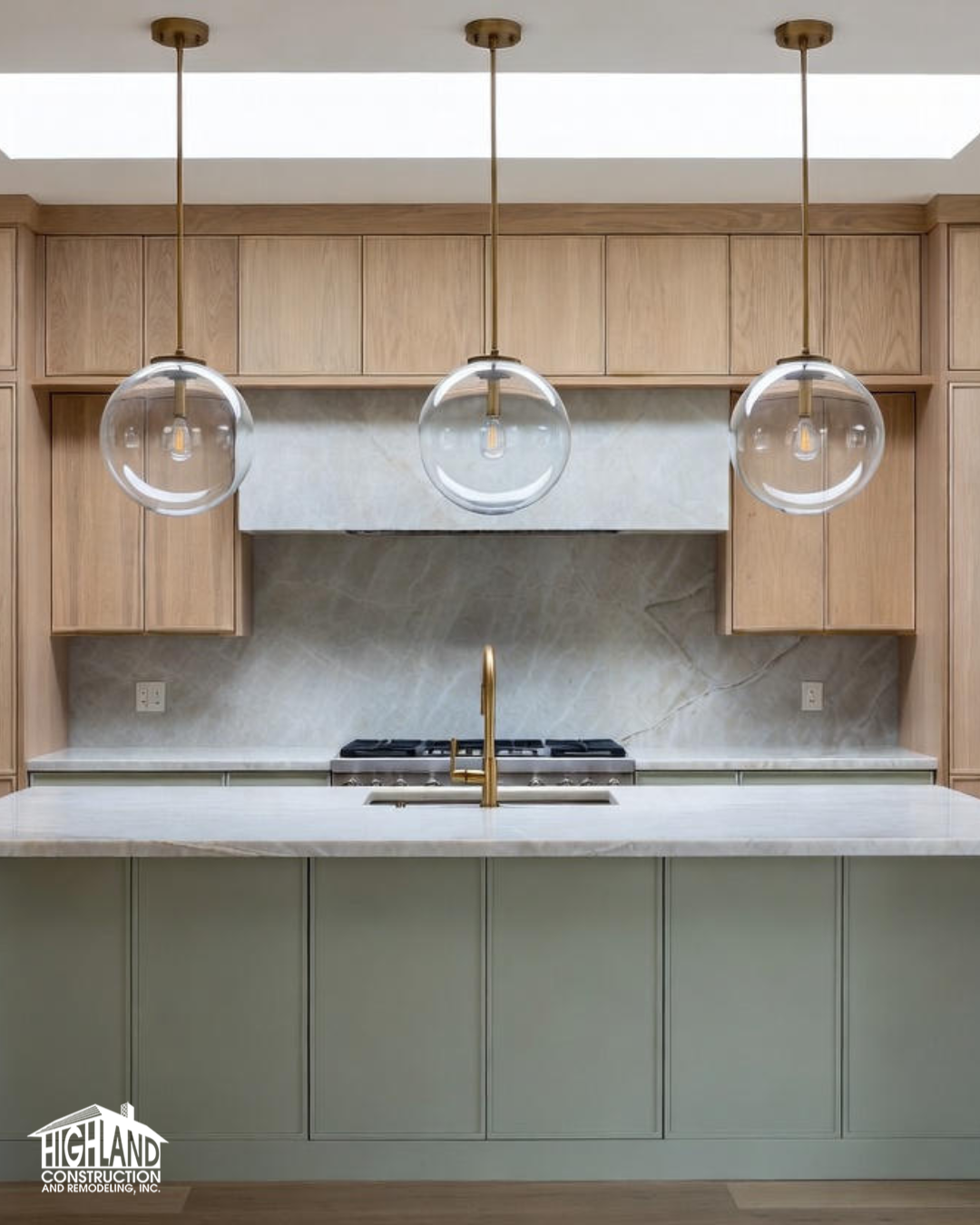
Every kitchen has a defining voice. In this one, that voice became white oak.
Rift-cut white oak cabinetry was selected not simply for its aesthetic appeal, but for the subtle emotional qualities it introduces into a space.
White oak carries warmth without heaviness.
Texture without visual noise.
Elegance without formality.
Unlike darker woods that anchor a room with drama, white oak gently lifts it. The grain pattern offers movement while remaining calm, creating depth without distraction.
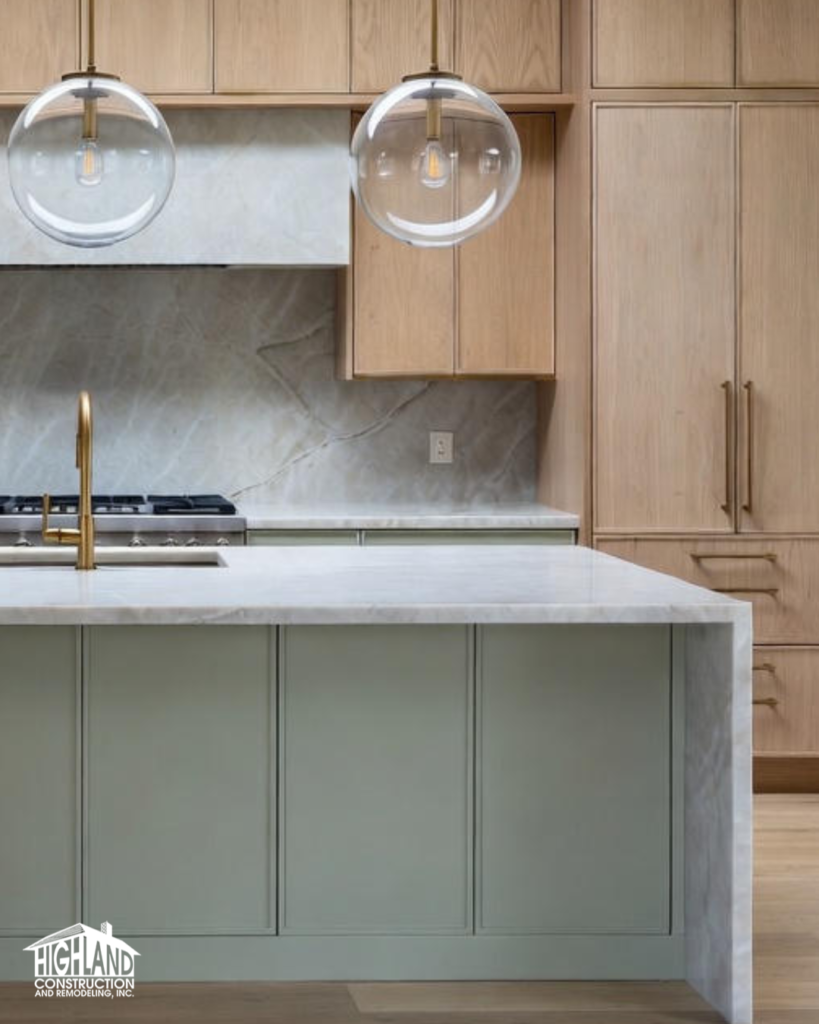
In this kitchen, the cabinetry forms a continuous architectural envelope. Clean-lined, refined, and quietly sophisticated, it establishes a visual foundation that feels organic yet distinctly modern.
The wood softens the geometry of the space.
It absorbs and diffuses light.
It creates a sense of quiet permanence.
Most importantly, it prevents minimalism from feeling sterile.
It absorbs and diffuses light.
It creates a sense of quiet permanence.
Most importantly, it prevents minimalism from feeling sterile.
Sage Green: A Color That Speaks Softly
Where the oak introduces warmth, the sage green island introduces personality.
Color in Scandinavian-inspired design is rarely loud. It emerges subtly, often through muted tones drawn from nature — moss, stone, clay, sky, sand.
Sage green was chosen for its remarkable versatility.
It feels fresh yet timeless.
Modern yet soothing.
Distinctive yet understated.
Against the pale oak backdrop, the island becomes a visual anchor. Not a bold statement, but a gentle contrast that grounds the room without interrupting its serenity.
Sage green was chosen for its remarkable versatility.
It feels fresh yet timeless.
Modern yet soothing.
Distinctive yet understated.
Against the pale oak backdrop, the island becomes a visual anchor. Not a bold statement, but a gentle contrast that grounds the room without interrupting its serenity.
The tone shifts with the daylight.
Cooler in the morning.
Warmer by afternoon.
Softly atmospheric by evening.
Cooler in the morning.
Warmer by afternoon.
Softly atmospheric by evening.
Rather than dominating the palette, the sage integrates seamlessly, reinforcing the kitchen’s calm, layered composition.
Stone: Movement, Texture, and Subtle Drama
While wood and color establish warmth, stone introduces dimension.
The waterfall-edge countertop and full-height backsplash create a sculptural presence that elevates the kitchen beyond mere functionality. The stone’s soft veining adds movement, ensuring the minimalist design never feels flat or static.
Stone performs multiple roles here:
It reflects natural light
It adds visual texture
It introduces refined contrast
It reinforces architectural clarity
It reflects natural light
It adds visual texture
It introduces refined contrast
It reinforces architectural clarity
The waterfall edge, in particular, transforms the island into more than a work surface. It becomes a monolithic centerpiece — elegant, grounded, and quietly dramatic.
Every seam, alignment, and edge required precision. Stone of this scale and visibility leaves no room for error. The illusion of effortlessness depends entirely on disciplined craftsmanship.
And when achieved, the result feels seamless, intentional, and undeniably luxurious.
Every seam, alignment, and edge required precision. Stone of this scale and visibility leaves no room for error. The illusion of effortlessness depends entirely on disciplined craftsmanship.
And when achieved, the result feels seamless, intentional, and undeniably luxurious.
Lighting: Designing with Daylight
One of the most transformative aspects of this remodel was not a material, but light itself.
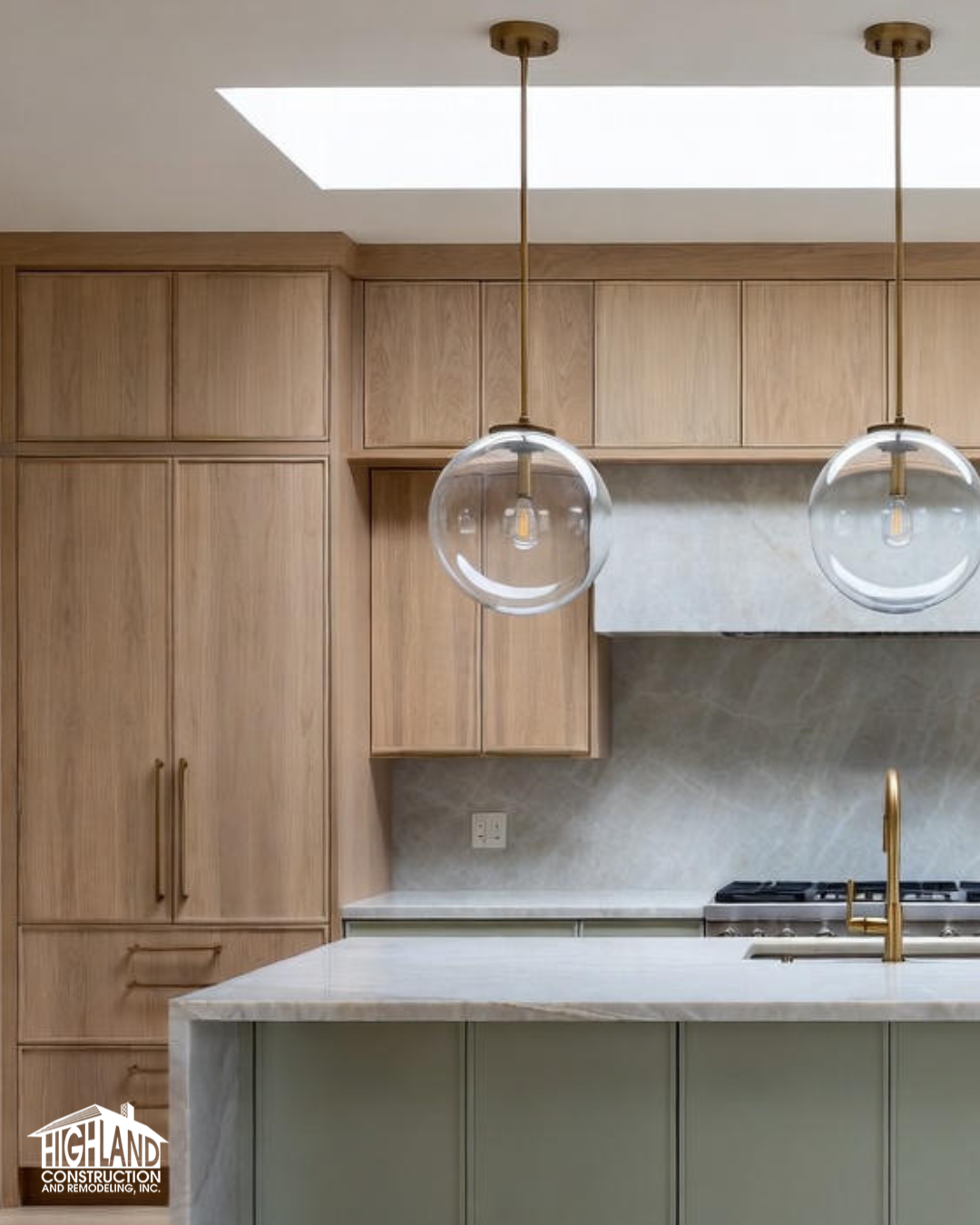
A generous skylight now floods the kitchen with natural daylight, dissolving shadows and amplifying the interplay of wood, stone, and soft color. Unlike artificial lighting, daylight shifts continuously — creating a living atmosphere that evolves throughout the day.
Morning light washes the oak in pale warmth.
Midday light sharpens textures and lines.
Evening light softens the entire composition.
The oversized glass pendant lights suspended above the island were chosen with equal care. Their transparency preserves visual openness while introducing sculptural elegance.
They do not block light.
They frame it.
Midday light sharpens textures and lines.
Evening light softens the entire composition.
The oversized glass pendant lights suspended above the island were chosen with equal care. Their transparency preserves visual openness while introducing sculptural elegance.
They do not block light.
They frame it.
Together, skylight and pendants create a layered lighting experience that feels luminous without harshness.
Flow and Function: Beauty That Works
Beyond aesthetics, the remodel focused heavily on functionality.
The layout was refined to improve circulation, task efficiency, and spatial clarity. Storage solutions were integrated seamlessly, preserving the clean-lined design while enhancing usability.
Appliances were carefully positioned.
Work zones were optimized.
Visual clutter was minimized.
Work zones were optimized.
Visual clutter was minimized.
In high-performance kitchens, functionality is invisible. When done correctly, the space simply feels intuitive.
Everything is where it should be.
Movement feels natural.
Nothing feels forced.
Everything is where it should be.
Movement feels natural.
Nothing feels forced.
The Emotional Shift: From Space to Experience
What changed most dramatically was not what the eye sees, but what the homeowner feels.
Where the previous kitchen felt segmented, the new one feels cohesive.
Where it once felt heavy, it now feels weightless.
Where it once felt dated, it now feels timeless.
Where the previous kitchen felt segmented, the new one feels cohesive.
Where it once felt heavy, it now feels weightless.
Where it once felt dated, it now feels timeless.
The kitchen no longer competes for attention.
It supports life effortlessly.
It supports life effortlessly.
Morning coffee feels calmer.
Cooking feels more fluid.
Gatherings feel more inviting.
Cooking feels more fluid.
Gatherings feel more inviting.
Minimalism, when paired with warmth, creates not emptiness but clarity — a visual and emotional quiet that allows daily life to unfold without friction.
A Kitchen That Belongs to Los Angeles
Though Scandinavian in inspiration, this kitchen is unmistakably Californian.
It responds to natural light.
It embraces openness.
It balances modernity with comfort.
It responds to natural light.
It embraces openness.
It balances modernity with comfort.
Los Angeles living demands spaces that are both refined and relaxed, elegant yet approachable. This remodel captures that balance — delivering a kitchen that feels elevated without feeling formal.
It is serene without being austere.
Luxurious without excess.
Modern without trend dependency.
Luxurious without excess.
Modern without trend dependency.
Craftsmanship Behind the Calm
Achieving simplicity is rarely simple.
Clean lines demand precise alignment.
Minimal palettes require flawless finishes.
Natural materials reveal every imperfection.
From cabinetry installation to stone fabrication, lighting integration to final detailing, construction precision became the silent partner of the design vision.
True luxury hides within accuracy:
True luxury hides within accuracy:
Level surfaces
Seamless transitions
Perfectly balanced proportions
Seamless transitions
Perfectly balanced proportions
Because when craftsmanship is executed at the highest level, the result doesn’t feel “built.”
It feels inevitable.
The Result: Modern Serenity
Today, the kitchen stands as a study in modern serenity.
White oak provides warmth.
Sage green introduces softness.
Stone adds quiet drama.
Light defines atmosphere.
Together, they create a space that feels timeless, calming, and deeply livable — a kitchen designed not just for visual impact, but for the experience of daily life.
Final Reflections
In many remodels, transformation is measured by contrast — before and after.
But in this project, the true success lies in something subtler:
The kitchen now feels like it has always belonged.
The kitchen now feels like it has always belonged.
Not because it mimics the past,
but because it aligns perfectly with how the homeowners live today.
but because it aligns perfectly with how the homeowners live today.
Considering Your Own Kitchen Remodel in Los Angeles?
Whether your vision leans minimalist, warm, bold, or timeless, the key is balance — between materials, light, proportion, and craftsmanship.
Because the most beautiful kitchens are not defined by trends.
They are defined by how they make you feel every single day.
They are defined by how they make you feel every single day.