Why Custom Vanities Are Worth It in a Bathroom Remodel
Published on: June 2, 2026
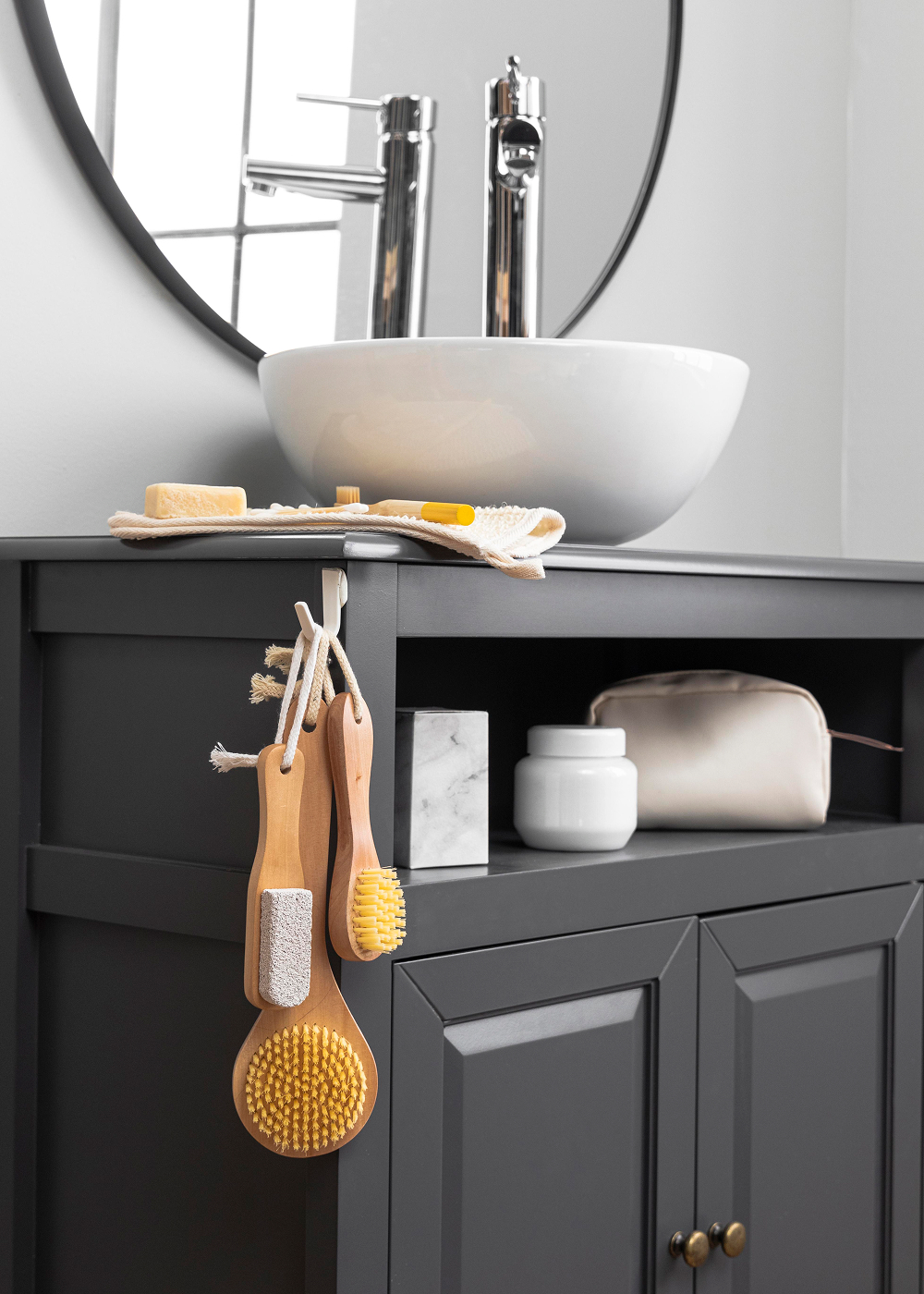
Quick answer (featured snippet): Why custom vanities are worth it
Custom vanities are worth it when you need a precise fit, better storage, higher-quality materials, or a truly cohesive design. They’re especially valuable in small bathrooms, awkward layouts, and high-end remodels where function and finish quality matter.
What is a custom bathroom vanity (and what it isn’t)
A “custom vanity” can mean different things depending on who you ask.
Stock vanity
- Pre-made sizes and finishes
- Fastest and often cheapest
- Limited fit and storage efficiency
Semi-custom vanity
- Some size flexibility and finish options
- Better quality than many stock options
- Still constrained by a catalog
Fully custom vanity
- Built to your exact dimensions, storage needs, and style
- Material and hardware choices are typically higher-end
- Requires planning, measurements, and lead time
Expert insight
If your bathroom has tight clearances, off-center plumbing, or you want drawer-first storage, fully custom is where you stop compromising.
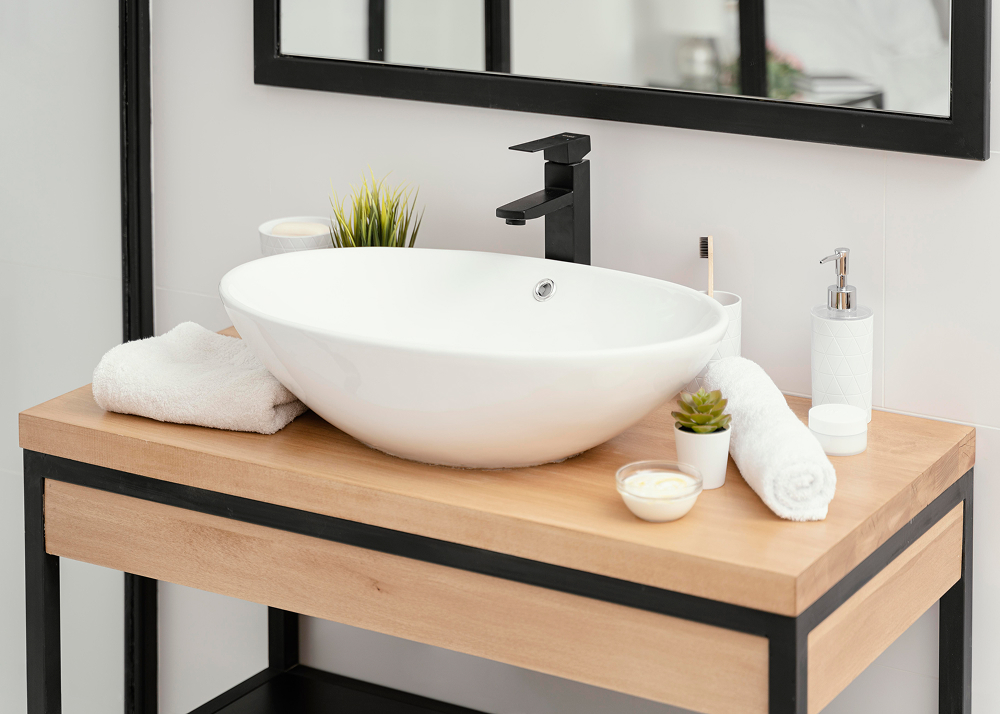
1) Custom vanities maximize storage (without making the room feel smaller)
Storage is the #1 reason homeowners upgrade their vanity—and the #1 reason they regret choosing the wrong one.
Why stock vanities waste space
Many stock vanities include:
- A large center “false drawer” panel
- A basic cabinet cavity with one shelf
- Minimal organization for daily items
Custom vanities can be designed around how you actually live:
- Deep drawers for hair tools
- Shallow top drawers for skincare and grooming
- Pull-out organizers
- Built-in electrical outlets inside a drawer
Real example
In a 36” vanity, converting a traditional cabinet layout into full-depth drawers can dramatically increase usable storage—without changing the footprint.
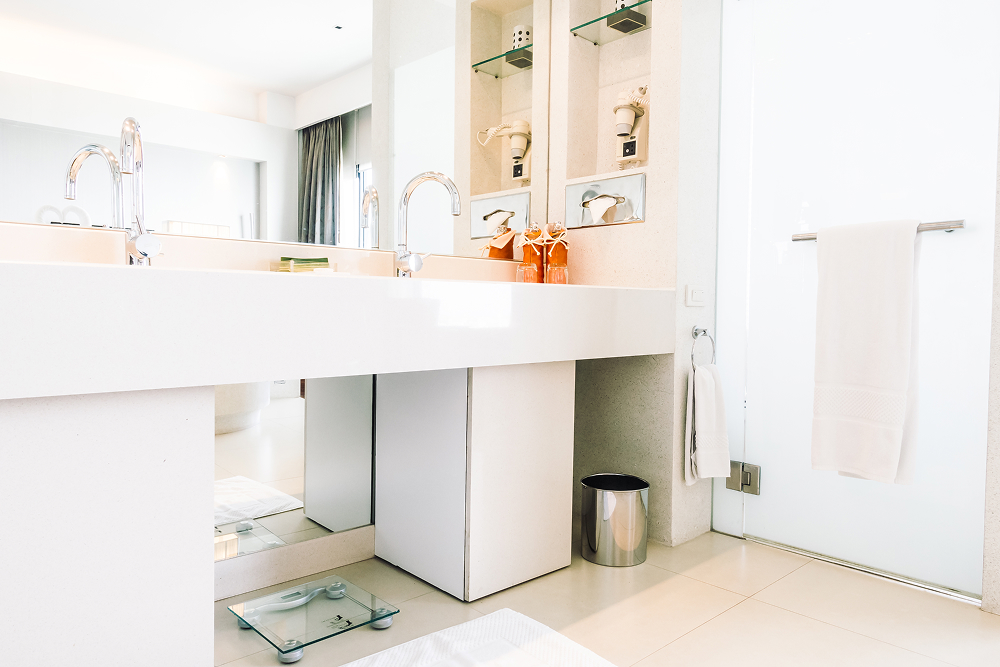
2) Custom sizing improves layout and traffic flow
In a bathroom, inches matter.
The most common sizing problem
A stock vanity is often:
- Too deep (crowds the walkway)
- Too wide (forces a smaller shower or tight toilet clearance)
- Too short/tall (uncomfortable daily use)
Custom solves the “almost fits” issue
A custom vanity can be built to:
- A slimmer depth (great for small bathrooms)
- Wall-to-wall sizing for a built-in look
- Exact height for comfort (especially for taller households)
Expert insight
A vanity that’s 2–4 inches less deep can make a small bathroom feel noticeably bigger—without sacrificing storage if the interior is designed correctly.
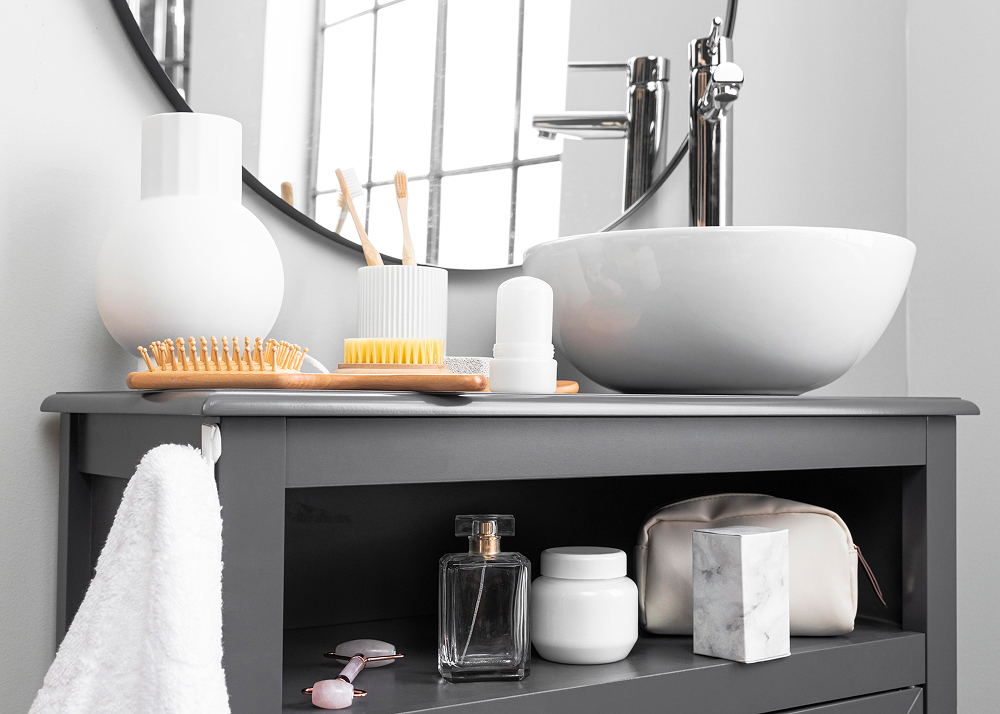
3) Custom vanities create a true “designer” look
A bathroom can have beautiful tile and fixtures, but if the vanity looks generic, the whole room feels less premium.
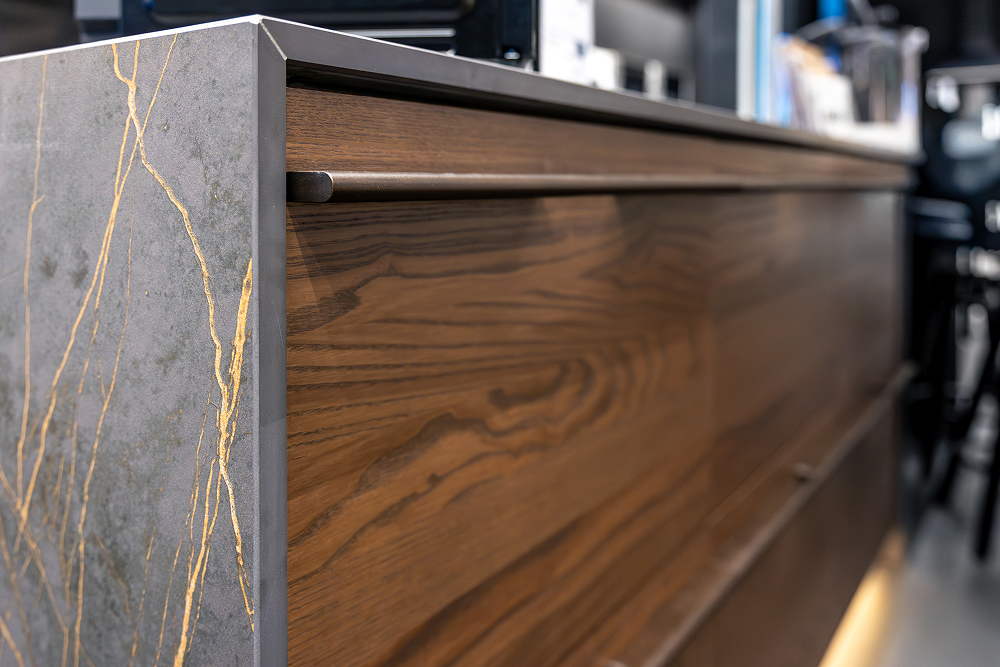
What makes a vanity look custom (even before you open a drawer)
- Perfect fit (no awkward filler strips)
- Clean toe-kick or floating design
- Consistent reveals and tight seams
- Integrated panels and finished ends
- Hardware that matches the rest of the bathroom
Pro tip
If you want the modern “built-in” feel, plan for:
- A scribed fit to walls
- Matching side panels
- A countertop with clean overhang proportions
4) Better durability and moisture resistance (when built correctly)
Bathrooms are high-moisture environments. Cheap materials show it fast.
Common stock vanity issues
- Swollen particle board near the floor
- Delaminating veneer
- Warping doors
- Rusting hardware
What to ask for in a custom vanity build
- Moisture-resistant materials (properly sealed)
- Quality drawer boxes (dovetail or durable alternatives)
- Soft-close hinges and slides
- A finish system designed for bathrooms
Expert insight
Custom doesn’t automatically mean “better.” The value comes from specifying the right materials and finishes for a wet environment.
The smartest way to decide: 6 questions to answer before choosing a style
1) What style is your home?
If your home is Spanish, Craftsman, Colonial, or traditional, a fully modern bathroom can feel out of place. If your home is contemporary, a heavily traditional bathroom can feel disconnected.
Pro tip: You dont have to match perfectlybut you should rhyme with the home.
2) Who uses this bathroom (and how)?
- Kids? Prioritize durability and easy cleaning.
- Guests? Prioritize a polished, universally appealing look.
- Primary bath? Prioritize comfort and daily enjoyment.
3) Do you want a tub, a shower, or both?
Modern styles often favor walk-in showers. Traditional styles often incorporate tubs more naturally.
4) How much maintenance are you willing to do?
If you hate sealing stone or scrubbing grout, choose materials that support your lifestyleregardless of style.
5) Whats your timeline and budget?
Some looks require more labor (intricate tile patterns, custom millwork). A great contractor can help you spend where it matters.
6) Are you remodeling for resale?
If resale is a priority, transitional often wins: timeless, clean, broadly appealing.
5) Custom vanities let you design around plumbing (instead of fighting it)
Plumbing placement is one of the biggest constraints in a remodel—especially in older homes.
How custom helps
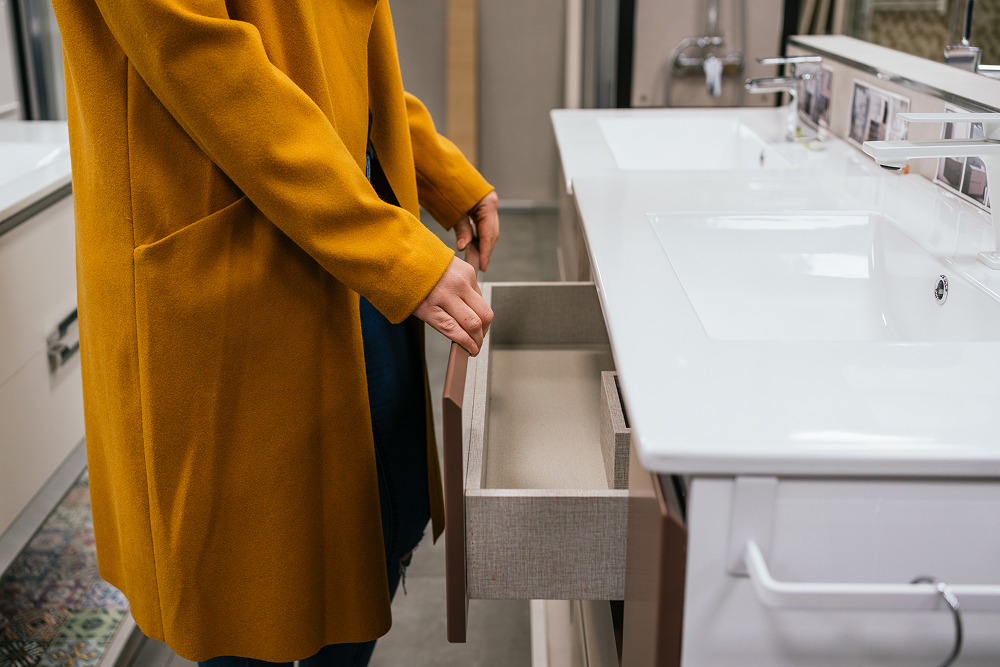
- Drawers can be designed with a U-shape cutout around plumbing
- Trap access can be planned cleanly
- You can avoid losing half the cabinet to pipes
Real example
Instead of a giant open cavity under the sink, a custom vanity can include two functional drawers plus a shallow top drawer, even with a center drain.
6) You can choose the exact countertop + sink combo you want
Custom vanities make it easier to get the sink setup that matches your priorities.
Popular modern options
- Undermount sink (easy to clean)
- Integrated sink (seamless look)
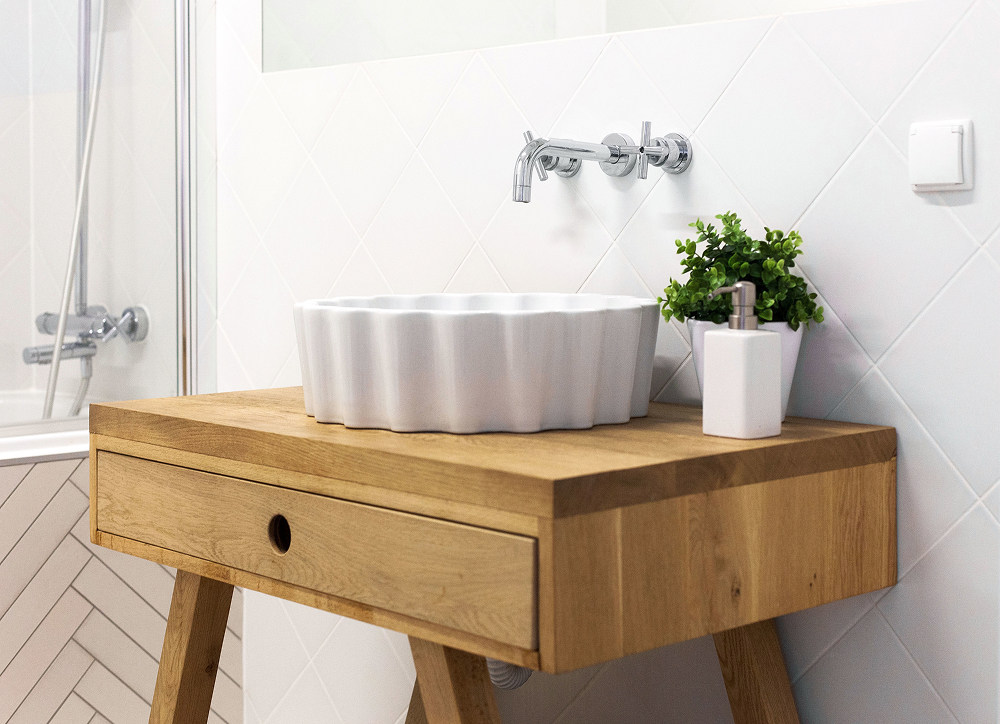
- Vessel sink (style-forward, but can reduce counter usability)
Pro tip
If you want the bathroom to feel bigger, prioritize:
- A clean counter edge
- Minimal seams
- A sink size that doesn’t dominate the surface
7) Custom is often the best move for small bathrooms
Small bathrooms punish “standard sizes.”
Why custom wins in tight spaces
- You can reduce depth and reclaim walking space
- You can add vertical storage (tower + vanity coordination)
- You can keep counters clear with smarter drawer layouts
Expert insight
In a small bathroom, a custom vanity can be the difference between “tight and cluttered” and “clean and functional.” It’s not just aesthetics—it’s usability.
Cost: How much does a custom bathroom vanity cost?
Pricing varies by region, materials, and complexity, but here’s a practical way to think about it.
What drives cost
- Size (single vs. double)
- Material (solid wood, plywood, MDF, specialty finishes)
- Drawer count and interior organizers
- Finish type (paint-grade vs. stain-grade)
- Countertop material (quartz, stone, solid surface)
- Installation complexity
Value framing (conversion-focused)
A custom vanity isn’t just a cabinet—it’s a daily-use system. If it eliminates clutter, improves flow, and holds up for 10–20 years, the cost often makes more sense than replacing a cheaper vanity after moisture damage or living with constant frustration.
When a custom vanity is worth it (and when it’s not)
Custom is worth it if:
- Your bathroom has an awkward layout or tight clearances
- You need more storage without increasing footprint
- You want a true high-end, cohesive look
- You’re remodeling a primary bath (daily use)
- You’re investing in quality finishes for resale
A stock or semi-custom vanity may be enough if:
- It’s a simple guest bath with standard dimensions
- Budget is the top priority
- You’re doing a fast refresh (not a full remodel)
- You found a vanity that truly fits the space and storage needs
Actionable tips: How to plan a custom vanity the right way
1) Start with how you use the bathroom
Make a quick list:
- What lives on the counter today (and why)
- What needs to be hidden
- Who uses the bathroom (kids, guests, two adults)
2) Measure clearances before choosing size
Key checks:
- Door swing
- Toilet clearance
- Shower entry
- Walkway space in front of vanity
3) Decide: drawers vs. doors
In most remodels, drawers win:
- Better organization
- Easier access
- Higher perceived value
4) Choose finishes that match the rest of the bathroom
Keep it cohesive:
- Vanity finish
- Hardware finish
- Faucet and shower trim finish
5) Plan lighting and mirror with the vanity
A beautiful vanity can look underwhelming with poor lighting.
Recent Blogs
Luxury Bathroom Remodeling
Bathroom Remodel Checklist
Luxury Bathroom Remodel Cost (2026)
Best Tile for Bathrooms: Pros, Cons, and Costs
Bathroom Remodel Portfolio / Before & After
Common mistakes people make with custom vanities
- Designing for looks only A gorgeous vanity that lacks functional storage will still feel messy.
- Choosing the wrong depth Too deep crowds the room. Too shallow without smart drawers reduces usability.
- Ignoring plumbing reality If plumbing isn’t planned, you’ll lose drawers or end up with awkward cutouts.
- Not specifying moisture protection Bathrooms need sealed materials and the right finish system.
- Forgetting about outlets and daily tools Hair tools, toothbrushes, chargers—plan where they live.
- Mismatching hardware and finishes In a small space, inconsistency reads as “piecemeal.”
- Rushing the timeline Custom work requires lead time. Plan early so the remodel doesn’t stall.
FAQs
Are custom bathroom vanities worth the money?
Custom vanities are worth the money when you need a better fit, more efficient storage, higher durability, or a premium look. They’re especially valuable in small or awkward bathrooms.
What’s the difference between custom and semi-custom vanities?
Semi-custom vanities offer limited sizing and finish options from a catalog. Fully custom vanities are built to your exact dimensions and can be designed for specific storage and plumbing needs.
How long does it take to get a custom vanity?
Timelines vary by builder and finish type, but custom vanities typically require planning, fabrication, finishing, and installation time. Start the design process early in your remodel.
Do custom vanities increase home value?
They can, especially in primary bathrooms where buyers notice quality and storage. A custom vanity also improves day-to-day function, which adds practical value beyond resale.
What materials are best for a custom bathroom vanity?
Moisture-resistant, well-sealed materials are best. Ask for durable drawer hardware, proper sealing, and a finish designed for bathroom humidity.
Should I choose drawers or cabinets in a bathroom vanity?
Drawers are usually better for organization and accessibility. Many homeowners prefer a drawer-first design with a smart sink/plumbing layout.
Can you do a custom vanity in a small bathroom?
Yes—small bathrooms are often where custom makes the biggest impact because you can optimize depth, storage, and clearances.
Conclusion
A bathroom vanity isn’t just a cabinet—it’s where your routine lives. When you choose a vanity that fits perfectly, stores what you actually use, and holds up in a high-moisture space, the entire remodel feels more functional and more premium.
If you’re deciding between stock, semi-custom, and custom, here’s the simplest takeaway: custom is worth it when you’re tired of compromising—on storage, layout, durability, or the finished look.
Want help designing a vanity that fits your bathroom (and your routine) perfectly? Book a consultation and we’ll review your layout, storage needs, and style goals so you can invest once—and love it every day.